

The most significant jump-scare the movie business has witnessed in 2025? The return of horror as a dominant force at the UK film market.
As a category, it has impressively exceeded earlier periods with a 22% rise compared to last year for the British and Irish cinemas: over £83 million this year, compared with £68,612,395 in 2024.
“In the past year, not a single horror movie hit £10 million in UK or Irish theaters. Now, five have achieved that,” notes a film industry analyst.
The big hits of the year – a recent horror title (£11.4m), another hit film (£16.2 million), The Conjuring Last Rites (£14.98m) and 28 Years Later (£15.54 million) – have all hung about in the theaters and in the public consciousness.
While much of the industry commentary focuses on the standout quality of certain directors, their triumphs point to something shifting between audiences and the style.
“Viewers often remark, ‘This is a must-see regardless of your genre preferences,’” explains a head of acquisition.
“Such movies experiment with style and format to produce entirely fresh content, connecting with viewers on a new level.”
But beyond aesthetic quality, the consistent popularity of horror movies this year indicates they are giving cinemagoers something that’s much needed: emotional release.
“Currently, cinema mirrors the widespread anger, fear, and societal splits,” says a film commentator.
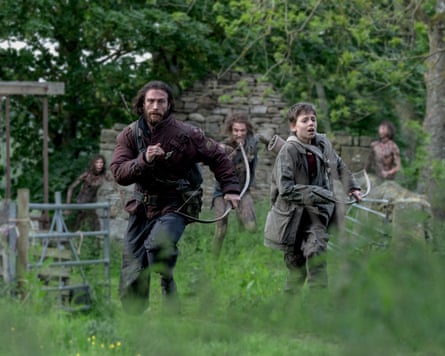
“Horror films are great at playing into people’s anxieties, while at the same time exaggerating them. So you forget about your day-to-day anxieties and focus on the monster on the screen,” remarks a noted author of vampire and monster cinema.
Amid a real-world news cycle featuring geopolitical strife, enforcement actions, extremist rises, and ecological disasters, ghosts, monsters, and mythical entities connect in new ways with viewers.
“Some research suggests vampire film popularity correlates with financial downturns,” states an actress from a popular scary movie.
“This symbolizes the way modern economies can exhaust human spirit.”
From film's inception, societal turmoil has shaped horror.
Scholars point to the rise of early cinematic styles after the WWI and the unstable environment of the 1920s Europe, with films such as early expressionist works and a pioneering fright film.
This was followed by the 1930s depression and classic monster movies.
“Take Dracula: it depicts an Eastern European figure invading Britain, spreading a metaphorical infection that endangers local protagonists,” notes a academic.
“So it reflects a lot of anxieties around immigration.”
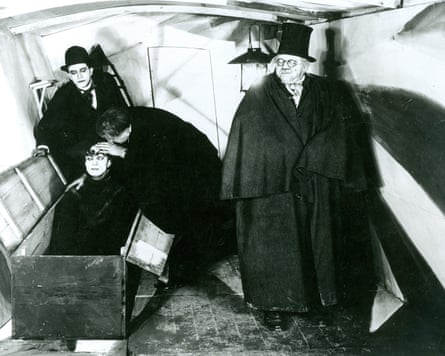
The specter of migration shaped the recently released supernatural tale The Severed Sun.
Its writer-director explains: “I wanted to explore ideas around the rise of populism. Firstly, slogans like ‘Let’s Make Britain Great Again’, that harken back to some fantasy time when things were ‘better’, but only if you were a rich white man.”
“Also, the concept of familiar individuals revealing surprising prejudices in casual settings.”
Arguably, the current era of celebrated, politically engaged fright cinema commenced with a sharp parody released a year after a divisive leadership period.
It introduced a recent surge of horror auteurs, including several notable names.
“It was a hugely exciting time,” comments a director whose project about a murderous foetus was one of the era’s tentpole movies.
“In my view, it marked the start of a phase where filmmakers embraced wildly creative horror with artistic ambitions.”
This creator, now penning a fresh horror script, notes: “During the past decade, viewers have become more receptive to such innovative approaches.”
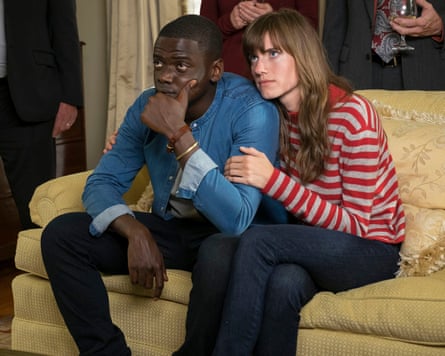
Concurrently, there has been a reappraisal of the overlooked scary films.
Earlier this year, a new cinema opened in the capital, showing underground films such as The Greasy Strangler, The Fall of the House of Usher and the modern reinterpretation of the expressionist icon.
The renewed interest of this “rough and rowdy” genre is, according to the venue creator, a clear response to the algorithmic content churned out at the box office.
“This responds to the sterile output from major studios. Today's cinema is safer and more repetitive. Many popular movies feel identical,” he says.
“In contrast [these alternative films] are a bit broken. It’s like they’ve erupted out of someone’s subconscious and been planted out there without corporate interference.”
Fright flicks continue to challenge the norm.
“They have this strange ability to seem old fashioned and up to the minute, both at the same time,” observes an authority.
Alongside the return of the mad scientist trope – with two adaptations of a literary masterpiece on the horizon – he predicts we will see fright features in the near future reacting to our current anxieties: about artificial intelligence control in the coming decades and “monstrous metaphors in power structures”.
Meanwhile, a religious-themed scare film The Carpenter’s Son – which tells the story of holy family challenges after the messiah's arrival, and features famous performers as the divine couple – is set for release later this year, and will undoubtedly create waves through the religious conservatives in the US.</

